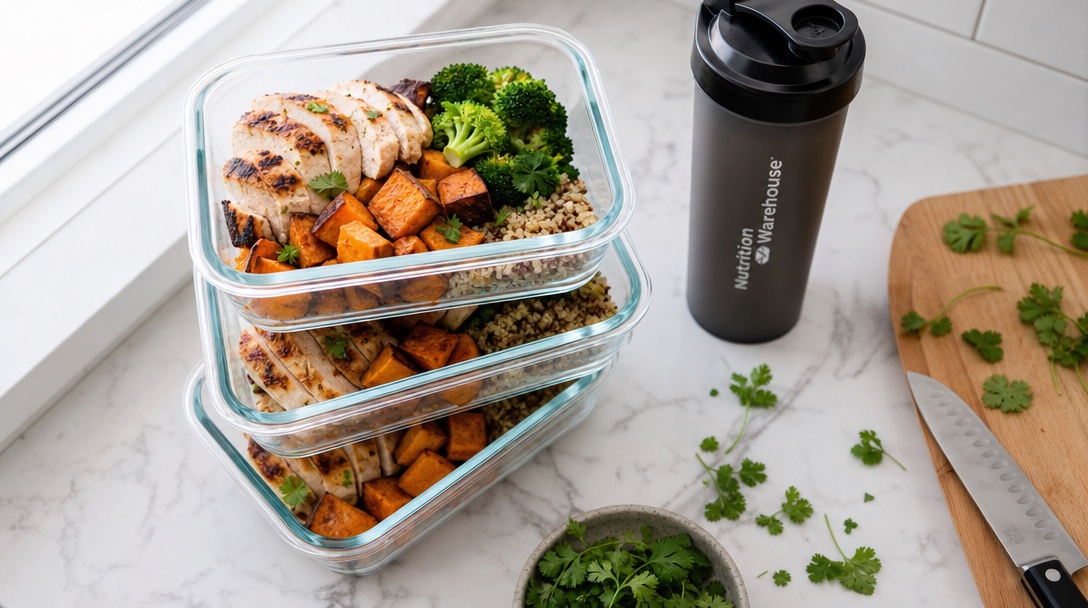
The 7-Day Protein Meal Plan for Muscle Building (No Powder Required)
Here's a question we get constantly at ProteinRanked: "I don't want to drink protein shakes — can I still build muscle with food alone?"
The answer is a confident yes. Whole foods can absolutely deliver everything whey does — protein, leucine, and the amino acids your muscles need — plus fibre, micronutrients and satiety that no scoop ever touches. Protein powder is a convenience tool, not a requirement. It's the difference between driving and walking: both get you there, but the vehicle isn't the destination.
So this week, we're doing something a little different. Instead of ranking tubs, we've built a complete 7-day, whole-food meal plan designed for the Australian kitchen. It hits 150g+ of protein per day, costs around $13–16 a day in groceries, and needs zero blenders. Let's get into it.
How Much Protein Do You Actually Need?
Before the menu, the numbers. For muscle building, the research (including Morton et al. 2018 in the British Journal of Sports Medicine) points to 1.6–2.2g of protein per kg of bodyweight per day.
| Bodyweight | Daily Protein Target |
|---|---|
| 60kg | 96–132g |
| 70kg | 112–154g |
| 80kg | 128–176g |
| 90kg | 144–198g |
This plan is sized for an 80kg lifter aiming for ~150g/day. If you weigh less, adjust portion sizes down — the structure stays identical. (New to protein targets? Start with our protein intake guide.)
The 7-Day Plan at a Glance
Every day delivers roughly 35–45g per main meal plus two snacks, using only supermarket ingredients. No protein powder in sight.
| Day | Breakfast | Lunch | Snacks | Dinner | Protein |
|---|---|---|---|---|---|
| Mon | 3-egg omelette + toast + cheese | Grilled chicken + quinoa + veg | Greek yoghurt & almonds | Beef bolognese + wholemeal pasta | ~160g |
| Tue | Overnight oats with milk & peanut butter | Tuna & chickpea salad | 2 boiled eggs | Salmon + sweet potato + greens | ~150g |
| Wed | Greek yoghurt, berries & granola | Turkey/chicken wraps | Cottage cheese & crackers | Chicken stir-fry + rice | ~155g |
| Thu | 3-egg omelette + toast | Leftover stir-fry (from Wed) | Protein yoghurt pouch | Beef mince tacos | ~155g |
| Fri | Overnight oats | Chicken & lentil soup | Boiled eggs + almonds | Pork loin + roast veg | ~150g |
| Sat | Bacon & eggs on toast | Prawn & quinoa salad | Greek yoghurt & honey | Steak + jacket potato + salad | ~160g |
| Sun | Protein pancakes (egg + oats) | Leftover steak wraps | Cottage cheese & fruit | Roast chicken + veg | ~155g |
Averaging ~155g of protein per day — squarely in the muscle-building zone with zero supplements involved.
Day-By-Day Breakdown
We'll walk through three days in detail so you can see the portion logic, then give you the quick version of the rest.
Monday: The Classic Lifting Day
Breakfast — 3-egg omelette (~32g protein): Whisk 3 eggs with a splash of milk, fold in baby spinach and 20g grated cheddar. Serve with 2 slices of whole-grain toast. That's about 30g right there.
Lunch — Chicken & quinoa bowl (~48g protein): Grill 180g of chicken breast, slice it over 1 cup of cooked quinoa, add roasted capsicum, cucumber and a lemon-yoghurt dressing.
Snacks (~25g): 200g Greek yoghurt with a handful of almonds.
Dinner — Beef bolognese (~55g protein): Brown 175g of beef mince with onion and garlic, add passata and Italian herbs, simmer 20 minutes and serve over wholemeal pasta. Leftovers make tomorrow's lunch easy if you double the batch.
Tuesday: The Budget Day
Breakfast — Overnight oats (~28g): Combine ½ cup rolled oats, 1 cup milk, 1 tablespoon peanut butter and a scoop of chia seeds the night before. Cheap, fast, and surprisingly filling.
Lunch — Tuna & chickpea salad (~42g): One 95g can of tuna in spring water, ½ cup chickpeas, tomato, cucumber, red onion and a simple olive oil and lemon dressing.
Snacks (~18g): Two boiled eggs with a little salt and pepper.
Dinner — Salmon & sweet potato (~60g): Two 150g salmon fillets baked with lemon and dill, a roasted sweet potato and steamed greens. Salmon's omega-3s pay dividends for recovery — and it's regularly on special at Coles and Woolies for under $14/kg.
Wednesday: The No-Cook Morning
Breakfast — Yoghurt bowl (~30g): 300g Greek yoghurt, a handful of berries, 30g of granola and a drizzle of honey. A 1kg tub of Greek yoghurt (~$6) covers four breakfasts.
Lunch — Chicken wraps (~45g): Shredded chicken breast, lettuce, tomato and tzatziki in two wholegrain wraps.
Snacks (~20g): Half a tub of cottage cheese with wholegrain crackers.
Dinner — Chicken stir-fry (~55g): 180g chicken thigh strips stir-fried with broccoli, carrot and snow peas in garlic and soy, served over 1 cup of cooked jasmine rice. Make extra — it's Thursday's lunch.
Days 4–7: The Leftover Economy
The second half of the week leans on leftovers and cheaper proteins, which keeps both effort and spend down:
- Thursday: Reheat Wednesday's stir-fry for lunch. Dinner is beef mince tacos (175g mince per person, corn tortillas, lettuce, tomato, cheese) — ~55g protein and always a crowd-pleaser.
- Friday: Oats again for breakfast. Lunch is a chicken and lentil soup (shredded cooked chicken, red lentils, carrot, celery — lentils add protein AND fibre for next to nothing). Dinner is pork loin (160g) roasted with pumpkin, carrot and potato.
- Saturday: The weekend treat. Bacon and eggs on toast for breakfast (~28g), a prawn and quinoa salad for lunch (~40g), and a 200g grass-fed steak with a jacket potato and salad for dinner (~65g).
- Sunday: Protein pancakes — 2 eggs, ½ cup oats and 1 mashed banana blended into a batter, cooked like small pancakes (~30g). Lunch uses leftover steak sliced into wraps with salad (~45g). Dinner is a roast chicken — carve dark and white meat together and you've got ~45g per generous serve.
What It Costs: The Australian Shopping List
Prices are indicative for Coles/Woolworths in 2026 (Aldi runs ~15% cheaper on most of these):
| Item | Amount | Price (AUD) |
|---|---|---|
| Chicken breast | 1.5kg | ~$16.00 |
| Beef mince | 750g | ~$10.50 |
| Pork loin | 500g | ~$9.00 |
| Steak (scotch fillet) | 500g | ~$15.00 |
| Salmon fillets | 400g | ~$13.00 |
| Bacon | 250g | ~$5.00 |
| Eggs (x18) | 18 | ~$7.00 |
| Greek yoghurt | 2kg | ~$12.00 |
| Cottage cheese | 500g | ~$5.50 |
| Canned tuna (x3) | 3 x 95g | ~$6.00 |
| Milk | 2L | ~$3.30 |
| Oats | 1kg | ~$2.50 |
| Quinoa | 500g | ~$5.00 |
| Rice / pasta / tortillas | — | ~$8.00 |
| Legumes (chickpeas, lentils) | — | ~$4.00 |
| Peanut butter | 500g | ~$6.00 |
| Fruit & veg (plan week) | — | ~$25.00 |
| Total | ~$153 — about $22/day for two, or $11 per person |
That works out to roughly $1.55 per 10g of protein when you factor in every ingredient — comparable to budget whey on sale, except you're also getting fibre, vitamins and full meals, not just a shake.
Meal Prep: One Hour, Five Days Sorted
The single biggest reason meal plans fail is the 6pm "I can't be bothered" moment. Fix it with a Sunday 60-minute prep session:
- Cook your grains in bulk. One big pot of quinoa or rice covers Monday–Wednesday lunches.
- Batch the mince. Brown the full 750g at once; use half for Monday's bolognese and half for Thursday's taco filling.
- Marinate and portion the chicken. Cut into 150–180g portions, season, and store in snaplock bags. It takes 10 minutes and makes cooking weeknights trivial.
- Boil six eggs for snacks.
- Pre-wash and chop the salad veg into containers so lunch assembly is a 2-minute job.
The Bottom Line
Protein powder is a tool — a genuinely useful one when you're busy or short on appetite. But whole foods build the same muscle and bring along micronutrients, fibre and satiety that shakes can't match. This plan shows what 150g+ of protein a day looks like without a single scoop: around $11 per person per day, seven days of variety, and every ingredient from a standard Australian supermarket.
And if you do want protein powder in your routine, it plays a perfect supporting role — add a shake on training days rather than replacing meals. Compare the best value tubs in the ProteinRanked database and use whole foods as your foundation.
Your muscles don't care where the amino acids come from. Your wallet and your taste buds might, though — and whole foods win on both.
Last updated 2026-09-14. This article was researched and published by the ProteinRanked Team. Nutrition figures are indicative estimates based on standard Australian product data (FSANZ) and may vary by brand and portion size. Prices are indicative of major Australian supermarkets in September 2026. For personalised nutrition advice, consult an Accredited Practising Dietitian (APD).